The Warrior - Proactive Engagement
The Warrior has stopped surviving and started fighting. This is the most dramatic internal shift in the entire arc: the protagonist crosses from being acted upon to acting deliberately, from reacting to events to generating them. After the Midpoint’s revelation, they have a plan, a target, and the will to pursue both. But the Warrior state contains its own trap — and that trap is what makes Act 2b interesting. The protagonist who has become proactive is now at risk of confusing capability with completeness. The Warrior’s problem isn’t weakness. The Warrior’s problem is believing that strength is enough.
What the Warrior State Actually Is
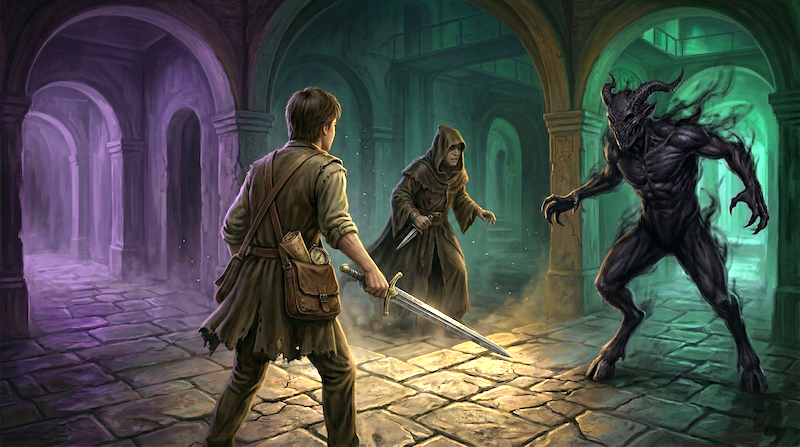
The Warrior shift is not about acquiring combat skills or becoming physically formidable, though stories often externalize it that way. It is a psychological shift from receiving action to initiating it. A Warrior protagonist makes plans and executes them. They identify obstacles and move to remove them. They see a goal and walk toward it rather than waiting to see what the world does next.
This shift — from reactive to proactive — is the most structurally important transition in the entire arc. Characters with reactive goals are acted upon; their stories happen to them. Characters with proactive goals happen to their stories. After the Midpoint, your protagonist should be making plans and executing them. If your Act 2b protagonist is still primarily running, hiding, and waiting for events to guide them, something has gone wrong.
The Warrior doesn’t have to win. But the Warrior has to choose.
The Warrior’s Internal Landscape
Goal: Strength and capability. The Warrior wants to be effective — to possess the power, skill, and determination required to overcome the obstacles between them and the Want. Where the Orphan wanted safety and the Wanderer wanted identity, the Warrior wants to be capable enough — to have what it takes.
Core fear: Weakness. Inadequacy. The discovery that they don’t have what it takes. This fear drives the Warrior to push harder, develop capability, and interpret every setback as evidence of insufficiency that must be compensated through greater effort. The Warrior’s fear of weakness is what makes them so impressive — and what makes them so vulnerable to the arc’s final demand.
Developmental task: Act despite inadequacy, and discover that true courage is taking necessary action rather than performing strength. The Warrior’s arc within Act 2b is the discovery that their Warrior-mode approach, however effective against external obstacles, cannot resolve the deeper internal conflict. Strength can win battles. It cannot complete the arc.
The Midpoint: Where the Warrior Is Born
The Warrior doesn’t exist before the Midpoint. That’s the transition’s importance. The Wanderer accumulates capability reactively, but doesn’t deploy it with intention. The Midpoint delivers the insight that makes Warrior-mode both possible and necessary.
Joseph Campbell called the Midpoint’s central event the "Ordeal": the hero’s descent into "the most dangerous place" to face "the most difficult challenge." Campbell described it as a death-and-rebirth experience — "something of the past must die so something greater can come to life." An old aspect of the self — usually an element of the Lie, or the self-image the Lie maintained — dies at the Midpoint. The protagonist who emerges is not the same as the one who descended.
This resurrection is not metaphorical. The protagonist at the Midpoint is granted new power, new insight, or new clarity — something that makes the Warrior stance possible. They didn’t have what it took to be proactive before. Now they do. That change must be visible in their behavior from the Midpoint forward: they make choices, execute plans, and initiate confrontations rather than waiting for them.
The Warrior is born through the Ordeal, not before it. If your Midpoint doesn’t contain a genuine transformation — a death-and-rebirth of some old operating assumption — there’s no believable basis for the reactive-to-proactive shift that follows.
What the Warrior Phase Looks Like in Story
The Warrior phase is Act 2b: Sequences 5 and 6, from approximately 50% to 75% of the story. During this phase:
The protagonist pursues the goal deliberately. They have an understanding of what they need to do and a strategy for doing it. Their plans may be wrong or incomplete — the Warrior’s Lie isn’t gone yet — but they’re genuinely trying to shape events rather than merely survive them.
The stakes escalate because of the protagonist’s actions. Wanderer-phase stakes escalate because the world keeps raising the pressure. Warrior-phase stakes escalate because the protagonist is making moves that demand responses. They’re acting on the antagonistic force rather than just responding to it. This is why Act 2b often feels more urgent than Act 2a: the protagonist’s agency creates velocity.
Skills accumulated in the Wanderer phase are deployed. Everything the protagonist learned in Sequences 3 and 4 — about the new world, about allies and enemies, about their own capabilities — becomes usable in Sequences 5 and 6. The Warrior acts from accumulated knowledge. This is why skipping or skimping the Wanderer phase is such a costly error: the Warrior’s effectiveness only makes sense if the learning was shown.
The Warrior’s approach starts to crack. By late in Sequence 6, the protagonist’s Warrior strategies are producing diminishing returns. The opponent is stronger than force can overcome, or the tactic is wrong, or the Lie that shapes the Warrior’s strategy is producing costs that can’t be ignored. This cracking is not failure — it’s preparation. The Warrior must discover the limits of Warrior-mode before the Martyr state becomes necessary.
The Warrior and the Lie at Peak Intensity
The Warrior phase is when the Lie stops being a limitation and starts being actively destructive.
In the Orphan phase, the Lie was the protagonist’s operating assumption — so foundational it was invisible. In the Wanderer phase, the Lie produced mistaken strategies that cost the protagonist, but the consequences were instructive rather than devastating. In the Warrior phase, the protagonist is deploying the Lie at full power: the same false belief, now backed by genuine capability and fierce determination.
This is the Lie’s peak influence. The protagonist is executing plans built on false premises. They’re demonstrating commitment to the wrong strategy. They’re winning sub-battles and losing the internal war.
A protagonist whose Lie is "I have to do this alone" will, as a Warrior, push away the allies they need at exactly the moment when their cooperation would be decisive. A protagonist whose Lie is "the end justifies the means" will, as a Warrior, make choices that damage or destroy the relationships the story needs them to value. The Warrior’s determination makes the Lie more damaging, not less — because now they have the capability to really commit to it.
This is the core dramatic irony of the Warrior phase: the protagonist is most impressive precisely when they’re most dangerously wrong.
The Warrior’s Developmental Challenge: The Trap of Strength
The Warrior’s developmental task — "discover that true courage is taking necessary action, not performing strength" — contains both a gift and a trap.
The gift: The Warrior can act even when they’re not certain of success. The Wanderer couldn’t. The Warrior’s willingness to engage despite uncertainty is an advance. They’re not waiting for confidence they don’t have; they’re choosing to act with the tools available to them.
The trap: The Warrior can mistake effectiveness for completeness. If they’re good enough at fighting, planning, and maneuvering, they might bypass the need for internal change entirely — win the external conflict while the internal one remains unresolved. The Warrior fears weakness; this fear drives them to substitute displays of strength for the genuine vulnerability that the Martyr state will require.
The Warrior who never loses never has reason to question whether Warrior-mode is sufficient. This is why the All Is Lost moment is not optional. It must genuinely collapse the Warrior’s best effort. The collapse has to be real enough that Warrior strategies are demonstrably exhausted. Otherwise the protagonist has no reason to access the Martyr state — and the arc never completes.
The Hero’s Journey: Warrior as the Second Half of Initiation
In Campbell’s monomyth, the Warrior state covers the second half of the Initiation phase. After the Ordeal (Midpoint), Campbell describes the hero’s "apotheosis" — their elevation to a new level of capability — followed by escalating tests and rewards that precede the Resurrection.
The Warrior phase is this escalating test sequence. The hero takes action from their new Ordeal-granted power. They achieve things they couldn’t have achieved before. But they’re moving toward the ultimate test — the threshold before the Return — which only the Martyr state can navigate.
The Warrior phase’s end event, the All Is Lost moment, corresponds to what Campbell calls the approach to the "Innermost Cave" or the moment before the "Supreme Ordeal" in certain frameworks: the hero’s resources are depleted, their strategy has failed, and they must access something deeper than capability and determination to continue. That something is the Martyr.
Writing the Warrior State Well
Make the proactive shift visible and specific. Don’t just tell the reader the protagonist is now taking charge. Show the change in behavior: a scene where the protagonist makes a plan and acts on it, rather than waiting to see what happens. The first genuine Warrior-mode action should feel like a gear shift — something the Wanderer-phase protagonist could not have done. Let the audience feel the difference.
Let the Warrior’s strategy be smart but limited. The Warrior should be impressively effective at fighting the external conflict — capable and determined, doing real damage to the opposition. But don’t let that effectiveness resolve the deeper problem. The Warrior wins sub-battles while losing the internal war. Readers should be able to see both the victories and the widening internal gap.
Give the Warrior a decisive setback before All Is Lost. The All Is Lost moment is the Warrior’s final structural collapse, but foreshadow it with an escalating failure in Sequence 6. The protagonist’s approach cracks before it shatters. This makes the All Is Lost feel inevitable rather than arbitrary — the collapse of something that was already weakening, not a sudden reversal.
Show the Lie operating at Warrior intensity. Whatever false belief has driven the protagonist, it’s now backed by real capability and determination. Make sure the audience can see the Lie producing consequences — relationships damaged, allies pushed away, wrong targets engaged — even as the Warrior racks up external wins. The dramatic irony of the Warrior phase is that the protagonist is most impressive precisely when they’re most wrong.
Don’t let the Warrior be invulnerable. The Warrior phase should still be full of internal conflict — the protagonist’s fears, the cost of the Lie, the moments when determination almost crosses into self-destruction. Proactive doesn’t mean uncomplicated. A Warrior without vulnerability is a machine; the audience needs to be able to worry about them.
Common Errors
The Warrior who never loses. A protagonist who is proactive and effective in Act 2b but faces no genuine reckoning has no reason to enter the Martyr state. The All Is Lost is not optional and it must be real — not a temporary setback the protagonist overcomes with more Warrior effort, but a collapse that genuinely exhausts the approach.
Skipping the Midpoint’s transformation. The Warrior emerges from the Midpoint’s death-and-rebirth experience. If the Midpoint doesn’t contain a genuine revelation or transformation, there’s no believable basis for the reactive-to-proactive shift. The Wanderer doesn’t just decide to become a Warrior; they’re changed into one. The decision requires a transformation; the transformation requires an Ordeal.
The Warrior phase without escalation. Each scene in Act 2b should raise the stakes, tighten the conflict, and advance the protagonist toward the inevitable confrontation. If Act 2b feels like it’s idling — same level of conflict, similar obstacles, no escalating pressure — the Warrior phase has no momentum. Proactive protagonists should be visibly changing their situation, which means the situation should be visibly responding.
Confusing proactive with aggressive. The Warrior makes deliberate choices — but those choices don’t have to be confrontational, loud, or physically dominant. A protagonist who makes a quiet, determined decision and follows it through is being a Warrior. What matters is intention and agency, not style.
Where the Warrior State Ends
The Warrior state ends at the All Is Lost / Second Plot Point — the structural event at approximately 75% of the story. The protagonist’s best Warrior-mode efforts have collapsed. The strategy has failed, the resources are depleted, or the approach has demonstrably hit its limits. Whatever the protagonist has been depending on — force, planning, determination, Lie-based strategy — can no longer carry them.
This is the arc’s lowest point. From here, only the Martyr state can complete the journey. The Warrior’s tools are exhausted. What the Martyr requires is not more capability but something the Warrior’s mode actively prevents: the willingness to sacrifice the Want.